

For years, I struggled with what seemed like a fundamental contradiction in medicine. How could doctors who take the Hippocratic Oath—who promise to “first, do no harm”—prescribe treatments like chemotherapy and radiation? I’d seen the devastating side effects these therapies can cause: nausea, hair loss, fatigue, weakened immune systems, and sometimes even organ damage. It didn’t make sense to me. How was deliberately causing such harm consistent with medicine’s most sacred principle?
This question nagged at me until I decided to dig deeper into what the Hippocratic Oath actually means and how medical ethics really work. What I discovered changed my entire perspective, and I’m writing this to share that understanding with others who might have the same confusion I did.

What “First, Do No Harm” Really Means
The principle “first, do no harm” is derived from the Hippocratic Oath, a guiding ethical framework of medicine dating back to ancient Greece. Here’s something surprising I learned: the exact Latin phrase “primum non nocere” doesn’t actually appear in the original oath. This simplified expression has become a popular representation of the principle of non-maleficence, but it’s often misunderstood.
The Hippocratic Oath is named after Hippocrates, a Greek physician, often called the “Father of Medicine.” While the oath’s exact wording has evolved over time and across cultures, its core principles have remained influential in shaping medical ethics.
The Principles That Guide Medical Practice
As I researched, I discovered the Hippocratic oath tradition encompasses several fundamental commitments that work together:
Beneficence means acting in the patient’s best interest and pursuing what will benefit their health and well-being.
Non-maleficence embodies “do no harm,” but as I learned, this doesn’t mean avoiding all harm at any cost.
Patient confidentiality protects the privacy of medical information.
Autonomy and informed consent respects patients’ rights to make their own healthcare decisions based on complete information. The oath also addresses the responsible use of medical knowledge, collaboration among healthcare professionals, and humility about the limitations of medical knowledge.
What struck me most was realizing that these principles, as a whole, don’t exist exclusively—they must be balanced against each other for them to function correctly.
The Answer I Was Looking For: It’s About Balance
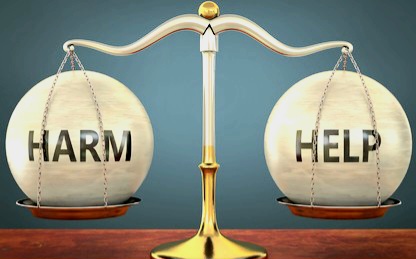
Here’s what finally made sense to me: “first, do no harm” isn’t about avoiding all harm whatsoever.
It’s about carefully weighing potential harm against anticipated benefits.
The key question isn’t “will this cause harm?” but rather “will the harm from treatment be less than the harm from not treating?”
Chemotherapy became an applicable example to illustrate this for me. Yes, chemotherapy causes significant harm through its side effects—I wasn’t wrong about that. But here’s what I was missing: without treatment, many cancers progress unchecked, causing even greater harm and leads to death.
When a doctor recommends chemotherapy, they’ve determined that the potential harm from untreated cancer far exceeds the harm from the treatment itself. They consider the patient’s overall health, the specific type and stage of cancer, and the likelihood of treatment success. It’s not a decision made lightly. Embarking on chemotherapy is a profound and deeply personal journey that carries both physical and emotional weight—for patients, families, and doctors alike.
Informed Consent: Empowering Patients

Another crucial piece I discovered is the role of informed consent.
Doctors are ethically required to fully explain both the risks and benefits of treatments like chemotherapy. They don’t hide the potential harm—they put it front and center so patients can make educated decisions about their own care.
This transparency honors both non-maleficence (doing no harm) and patient autonomy. The doctor provides their medical expertise on which option is likely to cause less overall damage. Still, ultimately, the patient decides whether to accept the recommended balance of risks and benefits.
A More Sophisticated Understanding

My initial confusion came from thinking “do no harm” meant “cause zero harm.”
What I’ve learned is that the principle is far more sophisticated.
It encompasses not only preventing physical harm but also proactively pursuing optimal health outcomes.
Medical practitioners must navigate a delicate balance: doing nothing risks harm from inaction, while intervening with powerful treatments carries its own risks. The ethical obligation isn’t to achieve the impossible goal of zero harm—it’s to choose the path that minimizes overall harm while maximizing benefit.
Why This Matters
I’m sharing this because I suspect I’m not alone in having misunderstood this fundamental medical principle. If you’ve ever wondered how doctors can prescribe harsh treatments while pledging to do no harm, I hope this explanation helps as much as it helped me.
The Hippocratic tradition isn’t about perfection or the absence of all negative effects. It’s about wisdom, careful judgment, and always acting in the patient’s best interest—even when that means accepting some harm to prevent greater harm. That’s a much more realistic and humane approach to medicine than the oversimplified version I originally imagined.
Understanding this hasn’t just answered my question—it’s given me greater respect for the difficult decisions medical professionals face every day.
 Timothy Dickert